Let's be honest — most of us are winging it with protein. Breakfast is coffee, lunch is rice-heavy, and dinner is whatever's in the ref. Then we wonder why we're always hungry by 3pm. Sound familiar? Same, bestie.
So let's talk protein: how much you actually need, and how it changes as you go from your 20s to your 60s.
The simple math (promise, it's easy)
The baseline most health guidelines use is 0.8 grams of protein per kilo of body weight per day. That's the minimum to cover your basic needs — not the sweet spot.
So if you weigh 60 kg: 60 × 0.8 = 48 grams a day, minimum.
If you're active, trying to keep muscle, or getting older, most experts suggest going higher — and that's where your age comes in.
In your 20s: build the foundation
This is when your body builds and holds muscle most easily. Lucky you.
- Aim for: 0.8 g/kg as your floor — around 1.2–1.6 g/kg if you work out, and up to 2.0 g/kg if you're seriously lifting.
- Real talk: a 60 kg girlie who goes to the gym 3x a week is looking at roughly 70–95 grams a day. That's not a lot of rice. It's a lot of eggs, chicken and fish.
In your 30s: protect what you've got
From around 30, we slowly start losing muscle every decade if we don't do anything about it. Not super dramatic yet — but it adds up.
- Aim for: about 1.0–1.2 g/kg, more if you're active.
- Pro tip: spread it out. Your body uses protein better when you get around 25–30 grams per meal instead of one giant steak at dinner.
In your 40s: strength is the new skinny
Hormones start shifting, metabolism gets a little extra, and muscle becomes your best friend for staying strong and energetic.
- Aim for: 1.0–1.2 g/kg, plus strength training a few times a week.
- Make it easy: start every meal with your protein. Eggs at breakfast, chicken or fish at lunch, and a protein-packed merienda so you're not raiding the pantry by 4pm.
In your 50s: keep the muscle, keep the energy
This is when muscle loss can speed up — especially for women around menopause. Protein plus movement is the combo.
- Aim for: 1.0–1.2 g/kg, with 25–30 grams at each meal.
- Don't skip breakfast protein. It's usually the meal that's lowest — and the easiest to fix.
In your 60s and up: protein is non-negotiable
Expert groups on healthy ageing generally recommend 1.0–1.2 g/kg for people over 65 — and a bit more if you're active or recovering from being sick — to help keep muscle and stay independent.
- Aim for: 1.0–1.2 g/kg, spread across 3 meals.
- A 65 kg lola or lolo is looking at roughly 65–80 grams a day.
Easy ways to hit your number
- Eggs: about 6 grams each.
- Chicken breast (palm-sized): around 25–30 grams.
- Fish or tuna: about 20–25 grams per serving.
- Tofu, Greek yogurt, cheese: great add-ons for merienda.
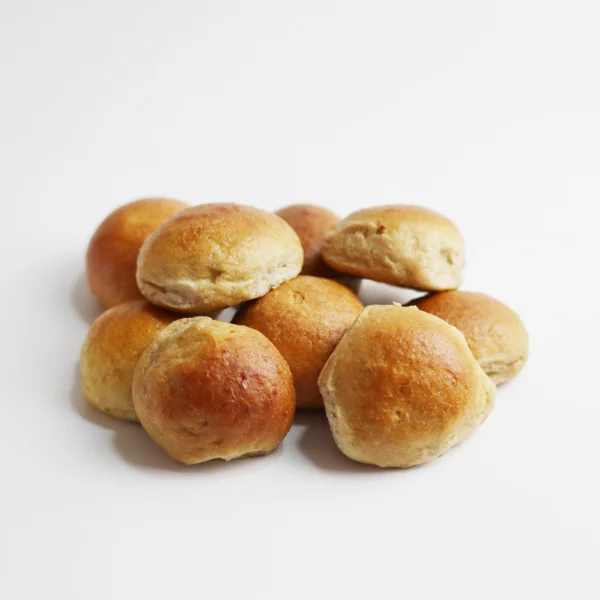
- Our [Keto Bread Rolls](/product/keto-bread-rolls): about 11 grams of protein per roll (est.), with only 3 grams of carbs. Sandwich + egg = a protein-packed baon. Sobrang dali.
- [The Best Keto Bread Loaf](/product/keto-loaf): toast it, top it with eggs or cheese, done.
The bottom line
Protein isn't just for gym bros. It's for anyone who wants to feel full, stay strong, and age like fine wine. Start with the math (your weight × 0.8 at minimum), level up as you get older or more active, and spread it across your meals.
Quick note: everyone's body is different. If you have kidney problems, diabetes, or any medical condition, check with your doctor before changing how much protein you eat.
Need an easy protein-friendly, low-carb, sugar-free snack? We got cha. Order at slimsnacksph.com 💛